What Is Agentic Commerce? How AI Agents Shop and Pay

Written by
Himanshu
Reviewed by
Rohit Joshi
Published 11 November 2026
Expert Verified
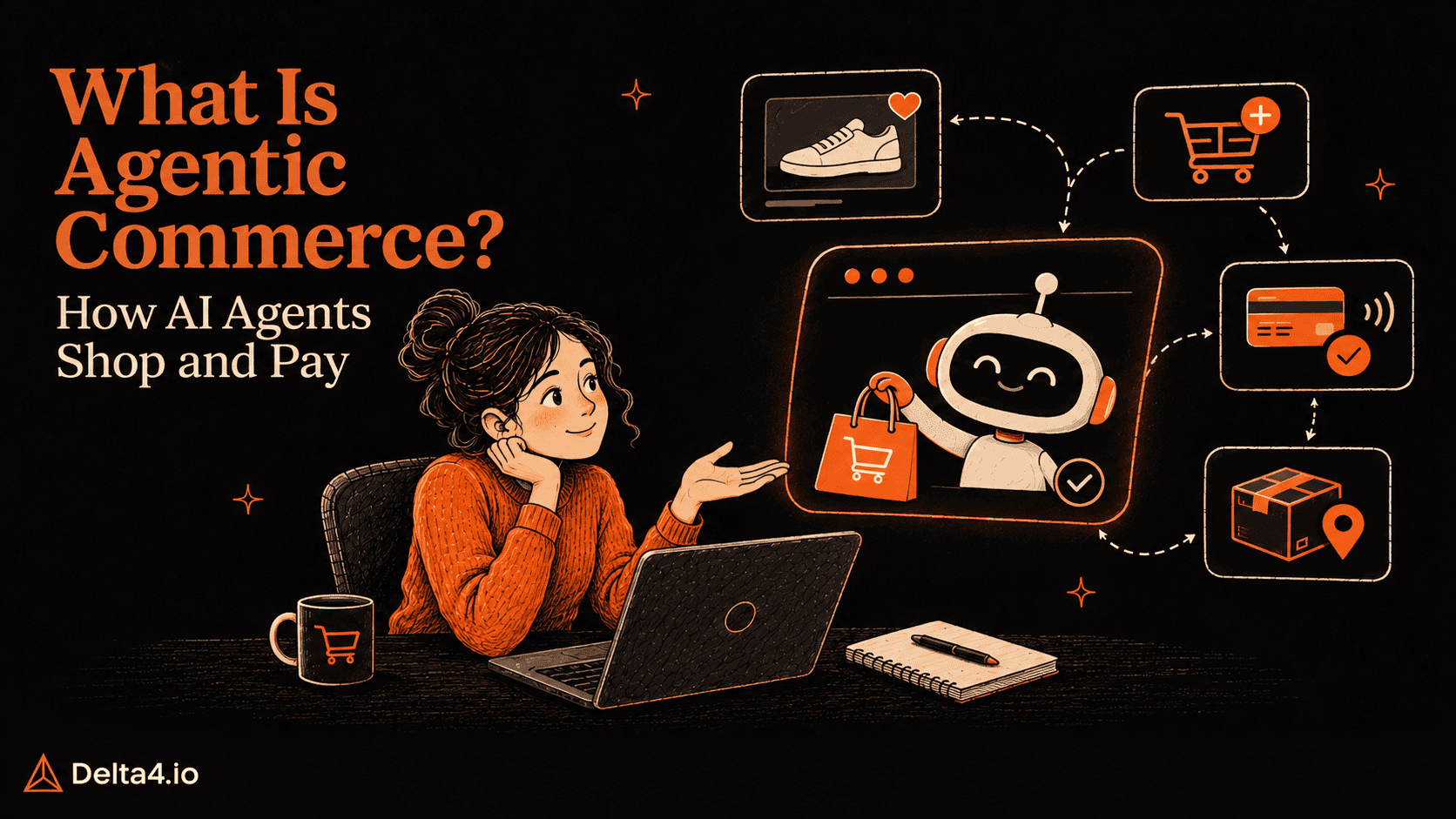
Quick Answer
Agentic commerce is a way of shopping where AI agents search for products, compare options, and make purchases on your behalf with your permission. As of November 2026, the technology is still developing. AI assistants already help shoppers find and evaluate products, but most purchases still require users to complete checkout themselves. Companies like Google, Visa, Mastercard, and OpenAI are developing payment standards that allow AI agents to complete transactions securely using limited-use payment tokens and verifiable records of user authorization.
TL;DR
- Agentic Commerce: AI agents help shoppers find, compare, and purchase products based on their preferences and authorization.
- How It Works: Agents use product catalogs, merchant APIs, and connected systems to manage tasks from product discovery to checkout.
- AI-Powered Payments: Tokenized payments, spending limits, and user approval help agents complete authorized transactions securely.
- Current Adoption: Google and OpenAI are advancing AI-powered shopping, while Visa and Mastercard are developing agent payment infrastructure. Fully autonomous purchases remain limited.
- Key Challenges: Payment security, incorrect orders, data privacy, prompt injection, and accountability require careful attention.
- Business Readiness: Accurate product information, compatible integrations, clear authorization rules, and real-world testing help merchants prepare for agentic commerce.
AI now does more than answer questions or recommend products. It can search for products, compare prices, and help customers complete purchases. This shift is changing how people shop online and how businesses sell their products.
This is where agentic commerce comes in. Instead of manually browsing different websites, customers can give AI agents a shopping request and let them handle much of the process. With the right permissions, these agents can even initiate payments. However, questions about security, user control, and payment authorization still need attention.
But how does agentic commerce actually work, and can AI agents really shop and pay on your behalf? This article explains how AI shopping agents work, the technology behind their payments, real-world examples, key risks, and what businesses need to know about this growing approach to online shopping.
What Is Agentic Commerce?

Agentic commerce is a way of buying and selling where AI agents handle shopping tasks on behalf of consumers or businesses. Unlike traditional AI assistants that only recommend products, these agents can search, compare options, check availability, and complete purchases with the required authorization.
The main difference is how much of the shopping process AI can handle independently.
For example, when shopping for a laptop under $1,000:
- Traditional AI assistant: Recommends three laptops based on your budget and preferences, leaving you to compare and purchase them.
- Agentic commerce: Searches available products, compares specifications and prices, checks delivery and return policies, selects a suitable option, and prepares the order for approval.
- Autonomous purchasing: In supported systems, an AI agent can complete purchases within predefined budgets and permissions without requesting approval for every transaction.
Agentic commerce works by connecting AI agents with product catalogs, merchant APIs, inventory systems, and payment services. It doesn’t remove human control; it reduces the manual work involved in shopping. Users set their preferences, spending limits, and approval requirements while AI agents handle the remaining steps.
Agentic Commerce vs. Traditional Ecommerce vs. Conversational Commerce
Traditional ecommerce relies on users to shop manually, conversational commerce uses AI to assist shoppers, and agentic commerce allows AI agents to complete shopping tasks with user authorization.
Here’s how they compare:
| Feature | Traditional Ecommerce | Conversational Commerce | Agentic Commerce |
| Product Search | Users search manually | Chatbots help find products | AI agents search based on user goals |
| Product Comparison | Users compare options | AI provides suggestions | AI evaluates and selects options |
| Purchase Decision | User decides | User decides with AI assistance | User or authorized AI agent decides |
| Checkout | User completes checkout | Usually completed by user | AI agent can initiate checkout |
| Payment | User pays directly | Usually user-authorized checkout | Agent can submit authorized payments |
| Multi-Step Tasks | Mostly manual | Limited automation | Can execute multiple connected tasks |
| Human Approval | User completes purchase | Usually required | Depends on permissions and spending limits |
| Personalization | Based on browsing history and preferences | Chatbots suggest products based on conversations | AI agents apply preferences, goals, and constraints across tasks |
| Task Execution | Users perform actions manually | Chatbots assist with individual tasks | AI agents plan and execute multiple steps toward a goal |
| Post-Purchase Support | Users track orders and request returns | Chatbots answer order-related questions | AI agents can track orders, initiate returns, and manage follow-ups |
The key difference is action, not conversation. Conversational commerce helps users make decisions, while agentic commerce allows AI agents to complete shopping tasks, from product search to payment, with user authorization.
Agentic Commerce Workflow

Agentic commerce uses AI agents to manage shopping tasks, from understanding user requirements to completing authorized purchases. These agents connect with product catalogs, merchant APIs, and payment systems to perform actions with minimal manual involvement.
Here’s how the process works:
Step 1: User Sets the Goal
The process starts when a user gives the AI agent a shopping request, such as “Buy running shoes under $150 with next-day delivery.”
The user can also set preferences, including brand, budget, delivery deadlines, preferred merchants, spending limits, and approval requirements.
Step 2: AI Agent Searches for Products
The agent searches product catalogs, merchant websites, and connected APIs to find relevant options. It retrieves information about pricing, availability, specifications, and delivery options based on the user’s request.
Step 3: Agent Compares Available Options
The AI agent evaluates products based on price, quality, specifications, reviews, shipping costs, and return policies. It selects suitable options that match the user’s requirements rather than simply listing search results.
Step 4: Agent Creates the Shopping Cart
Once a suitable product is selected, the agent adds it to the cart through supported merchant integrations. The merchant’s system confirms the latest price, stock availability, shipping charges, and applicable taxes before checkout.
Step 5: Purchase Authorization Is Verified
Before completing the transaction, the system checks whether the agent has permission to make the purchase. Depending on the setup, the user may need to approve the order or may have already authorized purchases within specific spending limits.
Step 6: Payment Credentials Are Provided
The agent uses an authorized payment method to initiate checkout. Secure systems can use tokenized or delegated payment credentials, reducing the need to expose sensitive card details directly to the AI agent.
Step 7: Merchant Processes the Payment
The merchant and its payment provider handle payment authorization, fraud checks, and transaction processing. Once the payment succeeds and the merchant accepts the order, the system generates an order confirmation and begins fulfillment.
Step 8: Agent Manages Post-Purchase Tasks
Depending on available integrations and permissions, the AI agent can continue assisting after checkout by:
- Tracking orders and delivery updates.
- Initiating returns or refund requests.
- Managing subscription renewals.
- Monitoring prices and handling follow-up requests.
The important distinction is that AI agents coordinate the shopping process, while merchants and payment providers remain responsible for processing transactions and fulfilling orders.
Understanding AI Agent Payment Systems
AI agents can make purchases using authorized payment methods, but they should not have unrestricted access to a user’s credit card or bank account. Instead, agentic payment systems use payment tokens, spending limits, and authorization controls to make transactions more secure.
Three important technologies help make this possible:
1. Payment Tokens: Protecting Card Details
Payment tokens act as substitutes for sensitive card information. Depending on the system, they can be restricted to specific transactions, merchants, or authorized agents.
For example, Mastercard Agentic Tokens allow AI agents to make payments on behalf of users through tokenized credentials. This helps protect card information while supporting controlled transactions.
2. Authorization Mandates: Defining What Agents Can Buy
Before making a payment, an AI agent needs permission to act on the user’s behalf. This authorization may define:
- Spending limits: The maximum purchase amount.
- Merchant restrictions: Where the agent can shop.
- Purchase conditions: Which products or services it can buy.
- Approval requirements: When additional user confirmation is necessary.
Google’s Agent Payments Protocol (AP2) uses cryptographically signed mandates to establish user intent and payment authorization. Its April 2026 update also introduced support for transactions based on previously approved instructions without the user being present.
3. Agent Verification: Confirming Identity
Merchants need to distinguish legitimate shopping agents from malicious bots.
Visa’s Trusted Agent Protocol helps merchants verify an AI agent’s identity and recognize trusted agent-driven shopping activity.
For checkout, OpenAI’s Delegated Payment Specification supports one-time payment requests with maximum charge amounts and expiration limits. Merchants and their payment providers remain responsible for processing transactions.
The key point: AI agents can initiate payments within authorized limits, while payment providers and merchants handle transaction processing, fraud checks, and settlement.
Impact of Agentic Commerce on Shoppers and Stores
Agentic commerce changes how customers find and buy products and how businesses reach potential buyers. Instead of relying entirely on websites and traditional search, shoppers can use AI agents to compare products, check prices, and complete purchases.
For Shoppers: Easier Shopping, but More Trust Concerns
AI shopping agents can save time by handling repetitive tasks. For example, Google’s Universal Cart brings products from different retailers into one place, while ChatGPT helps users compare prices, reviews, and product features.
However, shoppers also need to consider a few things:
- Less manual work: AI agents can compare products, monitor prices, and help with checkout.
- Better personalization: Recommendations can reflect budgets, preferences, and shopping history.
- Trust and transparency: Shoppers need to know whether an agent recommends products based on their needs or commercial partnerships.
- Privacy concerns: Agents may require access to personal information and purchasing preferences.
For Stores: Product Data Becomes More Important
As AI agents become part of online shopping, businesses need to make their product information easier for these systems to access and understand.
Here are the main changes:
- Machine-readable product data: Accurate descriptions, prices, availability, and policies help AI agents identify suitable products.
- AI shopping integrations: Platforms such as ChatGPT and Google allow participating merchants to make products available through AI shopping experiences.
- Checkout experience: Stores may need to support agent-compatible checkout while maintaining control over payments and fulfillment.
- Changing product discovery: Some customers may find and purchase products through AI agents without visiting multiple store pages.
- Marketing challenges: Businesses that depend heavily on traditional search traffic or retail advertising may need to adjust how they reach customers.
The key takeaway is that stores increasingly need to serve both human shoppers and AI agents. Clear product information, reliable integrations, and transparent policies can help businesses prepare as AI-driven shopping becomes more common.
Challenges of Agentic Commerce
Agentic commerce can make shopping easier, but allowing AI agents to make purchasing decisions and initiate payments introduces several challenges related to accuracy, security, privacy, and accountability.
1. Incorrect Purchases: AI agents may misunderstand user requests or rely on outdated product information, leading to wrong purchases, incorrect pricing, or missed delivery requirements.
2. Prompt Injection Attacks: Attackers can hide malicious instructions in product descriptions or websites to manipulate an agent’s decisions or redirect it to fraudulent checkout pages.
3. Unauthorized Spending: AI agents with excessive permissions may exceed spending limits, make unintended purchases, or buy from unapproved merchants.
4. Agent Identity and Payment Fraud: Merchants may struggle to distinguish legitimate AI agents from malicious bots, making fraud detection and transaction verification more difficult.
5. Data Privacy and Security: AI agents may access sensitive customer information, including addresses, purchase histories, and payment details, increasing the risk of data exposure.
6. Accountability and Payment Disputes: Determining responsibility can be difficult when an agent makes an incorrect or unauthorized purchase, especially when multiple platforms and payment providers are involved.
7. Protocol and Integration Challenges: Standards such as ACP, UCP, AP2, MCP, and A2A serve different purposes and have varying levels of adoption, complicating integration and compatibility.
These challenges show why security, clear permissions, reliable product information, and accountability remain important as agentic commerce develops.
Frequently Asked Questions
How do AI agents pay?
AI agents use payment tokens instead of your actual card number, along with authorization records showing what you approved. Mastercard calls its system Agentic Tokens, while Visa uses tokenized credentials. Google’s AP2 standard adds signed mandates connecting your shopping intent, cart details, and payment authorization.
Is it safe to let an AI agent shop for me?
Agentic shopping can be safe with appropriate controls, but risks remain. These include incorrect purchases, payment fraud, malicious instructions on websites, privacy concerns, and unclear liability. Keep human approval enabled, set spending limits, provide specific purchasing instructions, and use payment methods with strong dispute protections.
Who is responsible if an agent buys the wrong thing?
Responsibility for incorrect AI-initiated purchases is not fully settled. It may depend on the payment method, merchant policies, authorization records, and applicable laws. Keep order confirmations and transaction activity logs, and review the dispute protections offered by your payment provider.
What are ACP, UCP and AP2?
ACP (Agentic Commerce Protocol), developed by OpenAI and Stripe, connects merchants with AI shopping experiences such as ChatGPT. UCP (Universal Commerce Protocol), developed by Google and partners, supports shopping and checkout interactions. AP2 (Agent Payments Protocol) provides a framework for verifying user authorization through signed payment mandates. Each addresses a different part of agentic commerce.
How does MCP fit into agentic commerce?
Model Context Protocol (MCP) is an open standard that allows AI agents to connect with external tools, APIs, and data sources. In agentic commerce, it can help agents access product information or interact with supported business systems. However, MCP is not a payment or checkout protocol and does not independently authorize purchases.
Do I need to do anything if I run an online store?
You don’t need to rebuild your store immediately, but preparing for agentic commerce is worthwhile. Keep product prices, availability, shipping policies, and return information accurate. Review your ecommerce platform’s AI shopping integrations, verify checkout permissions, and test agent-driven transactions before enabling broader automation.
How big will agentic commerce get?
The market’s future size is uncertain. McKinsey estimates that AI agents could influence up to $1 trillion in US retail revenue and $3 trillion to $5 trillion globally by 2030 under moderate assumptions. These are projections, not guaranteed outcomes. Actual adoption will depend on customer trust, merchant integration, payment security, and shopping behavior.
Conclusion
Agentic commerce is changing how people search, compare, and purchase products, but fully autonomous shopping is still developing. AI agents can handle much of the process, while secure payments depend on user authorization, spending limits, and safeguards such as Google’s AP2 protocol.
For shoppers, the safest approach is to let AI research products and compare options while keeping payment approval in your hands. Limited spending permissions can support greater automation as these systems become more reliable.
For businesses, the priority is accurate product data, updated inventory, clear policies, and compatible checkout systems. Start by testing AI shopping integrations on a small product category before expanding.
The future of agentic commerce depends on making shopping more convenient without giving up control over important purchasing decisions.


