10 Best AI SEO Tools in 2026: Ranked & Compared

Written by
Taniya
Reviewed by
Himanshu
Last edited 03 August 2026
Expert Verified
TL;DR
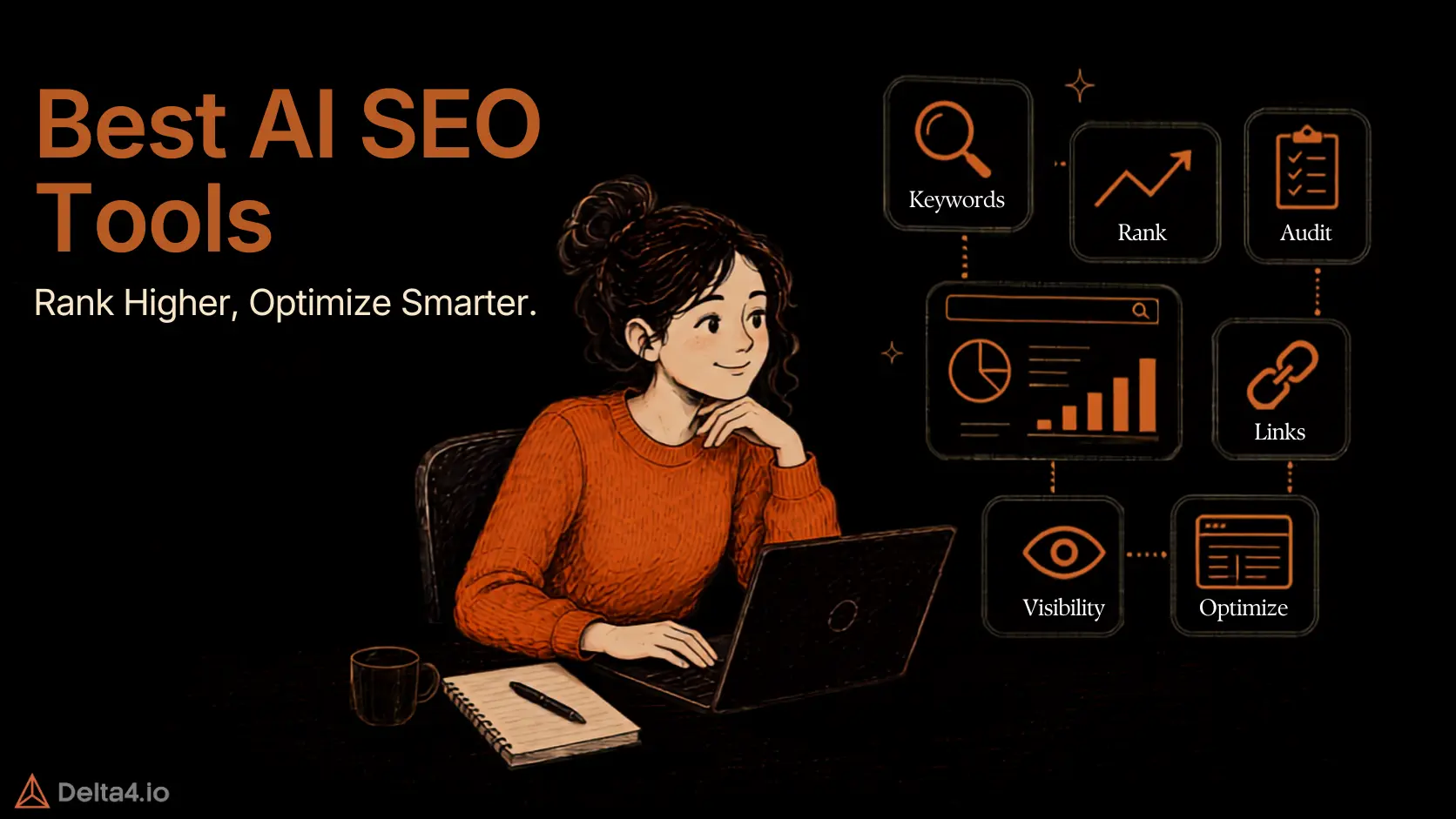
This guide covers the 10 best AI SEO tools for 2026, spanning all-in-one platforms like Semrush One, content optimization tools like Surfer SEO and Clearscope, and dedicated AI visibility trackers like Peec AI and Frase that measure whether ChatGPT, Perplexity, and Google AI Overviews mention a brand at all. Each entry includes verified pricing, free trial terms, and who the tool actually fits, so you can match the right tool to your real bottleneck instead of overpaying for features you won’t use.
What’s included in this roundup:
- Best all-in-one AI SEO tool: Semrush One, for teams that want traditional rankings and AI search visibility in one platform
- Best content optimization tools: Surfer SEO for live scoring while you write, Clearscope for grading finished drafts
- Best AI visibility (GEO) trackers: Peec AI and Frase, for measuring brand mentions across ChatGPT, Perplexity, and Google AI Overviews
- Best budget AI SEO tools: SE Ranking and Ubersuggest, for solo operators and small teams
- Pricing, free trials, and a quick comparison table for all 10 tools
What Counts as an AI SEO Tool in 2026?
AI SEO tools use artificial intelligence to speed up or automate search optimization work that used to be manual. This includes keyword research, content grading, technical audits, and a newer function called AI search visibility or generative engine optimization (GEO), which tracks whether AI engines mention a brand at all.
Key functions these tools perform:
- Keyword research and search intent mapping, finding target keywords and matching them to what searchers actually want
- Content scoring and optimization, grading a draft against top-ranking competitors for a given keyword
- Technical SEO audits, flagging site speed, crawlability, and on-page issues, with some tools deploying fixes automatically
- Backlink and competitor analysis, tracking who links to a site and how it stacks up against rivals
- AI search visibility tracking, monitoring brand mentions and citations across ChatGPT, Perplexity, Gemini, and Google AI Overviews
The category has split because search behavior itself has changed. A tool built to optimize for Google’s ranking algorithm won’t tell you whether a page gets cited when someone asks Gemini for a recommendation. Buying the wrong tool for the job, or assuming one tool covers both, is the most common mistake teams make when choosing AI SEO software right now.
How These AI SEO Tools Were Picked
- Does it solve one job well, or claim to solve all of them: A tool that tries to be an all-in-one suite, a content optimizer, and a GEO tracker at once usually does the third one worst. The picks below lean toward tools that are honest about their lane.
- Price against what the entry tier actually includes: A low sticker price with a credit cap that a real team hits in week one isn’t actually cheap.
- Whether the pricing reflects what the tool is today: Several tools in this space have shifted focus in the past year, Ahrefs cut its Starter plan price by 70% when it introduced a $29/month entry tier in January 2026, and MarketMuse quietly moved from self-serve pricing to demo-only quotes. Every price below was checked against the vendor’s own page as of July 2026 wherever that page could be reached directly.
- Whether AI-visibility tracking is a real feature or a bolted-on afterthought: Several tools now claim GEO tracking. Some built it as a core workflow, others added a single dashboard tab or a separately priced add-on. That distinction matters for anyone picking a tool specifically for AI-search visibility.
Quick Comparison: 10 Best AI SEO Tools at a Glance
| Tool | Best For | Starting Price | Free Trial |
|---|---|---|---|
| Semrush One | All-in-one SEO + AI visibility for agencies | ~$199/mo | 7-day trial |
| Surfer SEO | Live content scoring while you write | $99/mo | No (7-day refund window) |
| Ubersuggest | Budget SEO suite for solo operators | $29/mo | 7-day trial |
| Ahrefs | Backlink research and competitive analysis | $29/mo (Starter) | No |
| SE Ranking | Budget-friendly all-in-one with AI content editor | $129/mo ($103.20 annual) | 14-day trial |
| Frase | Content briefs + built-in AI-visibility tracking | $49/mo ($39 annual) | 7-day trial |
| MarketMuse | Topical authority modeling and content planning | Quote-based (historically ~$99/mo) | Free tier (limited) |
| Alli AI | Bulk automated on-page and technical SEO | Usage-based, ~$249+/mo | 10-day trial |
| Peec AI | Dedicated AI-visibility and GEO tracking | $95/mo | No free trial |
| Clearscope | Grading finished drafts against competitors | $129/mo | No |
MarketMuse and Alli AI pricing above should be confirmed directly before budgeting. MarketMuse’s current pricing page no longer lists self-serve dollar figures, and Alli AI prices by a site and keyword slider rather than a flat tier, so the number you’re quoted depends on your actual setup. Surfer SEO’s $99/mo tier is now called “Standard” on its official pricing page (formerly “Essential”) — same price, same position in the lineup, just a renamed plan worth knowing if you’re comparing screenshots from different months.
1. Semrush One

Semrush One is an all-in-one AI SEO tool. It pairs Semrush’s classic SEO suite with a dedicated AI Visibility Toolkit that tracks brand mentions across ChatGPT, Perplexity, and Google AI Overviews.
Key features
- Keyword research, site audits, backlink data, and competitor analysis in one dashboard
- AI Visibility Toolkit tracks brand mentions across ChatGPT, Perplexity, Google AI Mode, and AI Overviews, with regional coverage that has expanded past its original six-market launch
- One login covering both classic SEO and AI search visibility instead of stitching two tools together
- Best for agencies and in-house teams that want one login for traditional rankings and AI search visibility. See Semrush One’s official pricing page for current tiers.
2. Surfer SEO

Surfer SEO is a content optimization tool built around a live Content Editor. It scores your draft against pages already ranking for a target keyword as you write.
Key features
- Live content scoring against on-page signals from top-ranking competitors
- AI Tracker add-on for ChatGPT and Perplexity visibility
- Built-in Humanizer and rank-drop detection
- Full API access on higher tiers for teams that want to pull scoring into their own workflow
- Best for writers and content teams who want SEO scoring inside the document itself.

“I used SurferSEO before the update and saw significant improvements in my site’s ranking. Their keyword optimization tools are on point! Post-update, I’ve noticed a few bugs, but their support team is super responsive. Overall, it’s been a game-changer for my content strategy.”
3. Ubersuggest

Ubersuggest is a budget AI SEO tool built for solo operators and small businesses. It covers the core SEO workflow without an enterprise price tag.
Key features
- Keyword research and site audits with Google Search Console integration
- Rank tracking and backlink analysis
- AI Writer for content drafting
- AI Search Visibility feature checks how a site appears in ChatGPT, Gemini, and Google AI Overview responses
- Best for solo bloggers and early-stage sites that need core SEO tools on a tight budget. See Ubersuggest’s official pricing page for current tiers.
4. Ahrefs
Ahrefs is a backlink analysis and competitive SEO tool, built on one of the largest and most frequently updated link indexes in the industry.
Key features
- Site Explorer, Keywords Explorer, Site Audit, Rank Tracker, and Content Explorer
- Ahrefs AI adds AI-assisted keyword research, content creation, and localization
- Brand Radar tracks AI search visibility
- 500 million referring domains indexed, more than Semrush’s roughly 390 million — though Semrush’s total backlink count is larger by raw volume (43 trillion vs. Ahrefs’ 35 trillion). Ahrefs’ backlink index refreshes every 15 minutes.
- Best for agencies and in-house SEOs whose work depends on backlink data and competitive link research. See Ahrefs’ official pricing page for current tiers.
“Ahref backlink tool is pretty good compare to rest of the backlinks tools”
5. SE Ranking

SE Ranking is a budget-friendly all-in-one SEO platform with rank tracking, site audits, and an AI content editor.
Key features
- Rank tracking, site audits, and backlink monitoring included on every plan
- AI content editor for on-page optimization
- SE Visible (AI Results Tracker) adds AI search visibility tracking as a separate product or paid add-on
- White-label reporting built for freelancers and small agencies managing client sites
- Best for freelancers and small agencies that want Semrush- or Ahrefs-level SEO tools without the premium invoice.
6. Frase

Frase is a content workflow tool that combines topic research, drafting, and AI search visibility tracking in one subscription.
Key features
- Researches a topic, drafts in your brand voice, and scores content for SEO and GEO
- AI visibility tracking across ChatGPT, Perplexity, Claude, Gemini, and Google AI included from the entry tier
- Direct publishing to WordPress, Webflow, Sanity, and Wix
- Best for teams that want research, drafting, and AI-visibility tracking without a separate tracker subscription. If drafting quality matters more than the full SEO workflow, see our 10 best AI writing tools roundup.
“I’ve been using Frase for over 2 years now. I like it a lot for optimizing content and researching content to prepare briefs. I’ve never used its AI functions, and don’t think I ever would (same goes for all of these tools).”
7. MarketMuse

MarketMuse is a content planning tool that models topical authority across an entire site rather than optimizing one article at a time.
Key features
- Inventories a site and outputs prioritized content briefs and strategy documents
- Site inventory audit surfaces which existing pages need a refresh versus which topics are missing entirely
- Content Plan feature prioritizes which topics to create next based on authority gaps against competitors
- Best for mid-market and enterprise content teams planning topic coverage across a large site.
“MarketMuse – AI content intelligence and topic gap analysis.”
8. Alli AI

Alli AI is a technical SEO automation tool that deploys on-page fixes directly, without a developer touching the underlying code.
Key features
- Installs via a code snippet and crawls the site for on-page and technical SEO issues
- Deploys approved fixes automatically through a JavaScript overlay
- Changes reverse immediately if the subscription is canceled, since fixes live on the overlay rather than your site’s actual code
- Best for agencies and in-house teams managing large sites without developer bandwidth for manual SEO fixes.
9. Peec AI

Peec AI is a dedicated AI search visibility and GEO tracking platform, built only for that job.
Key features
- Runs defined prompts against ChatGPT, Perplexity, Google AI Overviews, and other AI engines
- Reports brand mentions, sentiment, citation sources, and competitive share of voice
- Simulates real browser sessions instead of calling APIs directly, for results closer to what a real user would see
- Unlimited users on every plan, with additional AI models available as paid add-ons
- Best for marketing teams and agencies that need focused AI search visibility monitoring alongside a separate content tool.
“Traditional SEO tools don’t track AI search visibility. Ahrefs and SEMrush show you what ranks in Google. Peec shows you what appears in ChatGPT, Claude, and Perplexity. They serve different purposes. We use both.”
10 Clearscope

Clearscope is a content grading tool that scores finished drafts against pages already ranking for a target keyword.
Key features
- Grades drafts A-through-F against a topic map built with natural language processing
- Unlimited users included on every plan
- Tracks AI citation visibility to flag when a brand gets cited in AI-generated answers
- Best for editorial teams that already have writers and want a precision tool for the final polish pass.
How to Choose the Right AI SEO Tool for Your Team
- You need one platform to cover both traditional rankings and AI-search visibility: Semrush One is built for exactly that combination.
- Your bottleneck is getting a specific piece of content to rank: Surfer SEO for live scoring while drafting, Clearscope for grading a piece that’s already written.
- Your business runs on backlinks and competitive research: Ahrefs remains the strongest data source for that specific job.
- You want research, drafting, and AI-visibility tracking in one workflow instead of three subscriptions: Frase covers that loop at the lowest entry price on this list.
- Budget is the primary constraint, but you still need a real toolkit: SE Ranking and Ubersuggest both cover the core workflow without a premium invoice, SE Ranking has more depth, Ubersuggest is cheaper.
- You’re planning content across a large site rather than optimizing one article: MarketMuse’s topical authority modeling is built for that scale, though budget for a sales conversation rather than a self-serve signup.
- You manage a large site without developer resources to implement fixes: Alli AI’s bulk automation solves that specific gap, with the tradeoff that the changes are rented rather than owned.
- AI-visibility tracking is the entire job, not a feature you want bundled in: Peec AI is a focused tool built for exactly that, without content or optimization features competing for attention in the interface.
Conclusion
Most teams don’t need all ten AI SEO tools. They need one that matches the actual bottleneck: an all-in-one suite if nothing is in place yet, a content optimizer if drafts already exist but underperform, or a dedicated AI visibility tracker if the real question is whether ChatGPT and Perplexity ever mention the brand. Add a second tool only once that first gap closes.
The category itself is shifting. Ahrefs, Semrush, and SE Ranking now bundle AI visibility tracking into platforms built for rankings alone, and Frase treats it as core rather than an add-on. Before you subscribe to any AI SEO tool in 2026, ask whether it also has an answer for what happens when someone asks an AI assistant the same question.
For tool decisions beyond SEO, see 30 best AI tools for work. To build a full content and SEO strategy around these tools, see The All-in-One SEO & Marketing Blueprint. Whichever tool you pick, run its free trial against a real keyword before you commit, and confirm current pricing on the vendor’s own page.
Frequently Asked Questions
What is an AI SEO tool?
An AI SEO tool uses artificial intelligence to automate parts of search optimization that used to take manual work. That includes keyword research, content grading against top-ranking pages, technical site audits, backlink analysis, and a newer function called AI search visibility, which tracks whether ChatGPT, Perplexity, and Google AI Overviews mention a brand at all.
Is there a free AI SEO tool?
None of the ten tools compared here offer a fully free plan built for real work. MarketMuse has a limited free tier for testing, and Ubersuggest, Semrush One, SE Ranking, Frase, and Alli AI all offer free trials ranging from seven to fourteen days. For most teams, running a free trial on a paid tool against a real keyword gives a clearer answer than a permanently free option would.
What’s the difference between SEO and GEO?
SEO optimizes a page to rank in Google’s organic results, while GEO (generative engine optimization) optimizes content to get cited or summarized inside AI answers from ChatGPT, Perplexity, and Google AI Overviews. The tactics overlap, structured, well-sourced content still wins both, but the measurement doesn’t: a page can rank #1 in Google and never get quoted by an AI engine, which is exactly the gap tools like Frase and Peec AI track.
What is the difference between an AI SEO tool and an AI visibility tracker?
A traditional AI SEO tool, like Ahrefs or Surfer SEO, optimizes content and technical signals to rank higher on Google. An AI visibility tracker, like Peec AI or Frase, measures something different, whether ChatGPT, Perplexity, and Google AI Overviews mention or cite a brand at all, independent of where that brand ranks. A page can rank well on Google and still be invisible in AI-generated answers.
Do I need more than one AI SEO tool?
Usually yes, but not right away. Keyword research, content grading, technical audits, backlink analysis, and AI visibility tracking are different jobs, and few teams need more than two or three tools running at once. Start with whichever tool solves your actual bottleneck, whether that is Surfer SEO for content scoring or Peec AI for AI visibility, then add a second tool once that gap is closed.
Which AI SEO tool is best for a small business on a tight budget?
Ubersuggest and SE Ranking are the two budget picks in this comparison. Ubersuggest starts at $29 a month and covers keyword research, site audits, and rank tracking for solo bloggers and early-stage sites. SE Ranking starts around $103 a month on annual billing and adds more depth, including AI search visibility tracking, for freelancers and small agencies who need slightly more than the basics.
How much should I actually budget for an AI SEO tool?
For a solo operator, $29 to $50 a month covers Ubersuggest or Frase’s Starter plan and handles the core workflow. Small teams doing serious content production should budget $100 to $200 a month for SE Ranking, Surfer, or Semrush One. Agencies managing multiple clients or wanting bulk automation, like Alli AI, should expect $250 or more a month once real usage kicks in.
What’s the cheapest way to get AI visibility tracking without buying a dedicated tracker?
Skip the standalone trackers and use what’s already bundled in. Frase includes AI visibility tracking across ChatGPT, Perplexity, and Gemini starting at $39 a month, and Semrush One folds the same tracking into its all-in-one plan. A dedicated tool like Peec AI at $95 a month only makes sense once you need deeper sentiment analysis or citation-source detail than a bundled feature provides.
Is Semrush or Ahrefs better for SEO in 2026?
Ahrefs still leads on raw backlink data and Content Explorer for link prospecting, while Semrush One wins if you also want AI visibility tracking bundled into the same login. Neither is universally better: pick Ahrefs at $29 a month if your work is backlink-heavy, or Semrush One at roughly $199 a month if traditional rankings and AI-answer visibility both matter to your team.
What SEO tools do agencies actually use in 2026?
Agencies managing multiple client sites tend to converge on a handful of picks from this list: Ahrefs or Semrush One for backlink and AI-visibility data, SE Ranking for white-label client reporting, and Alli AI when a site is too large to fix page by page manually. Most agencies run two of these together rather than relying on a single all-in-one platform.
Can AI SEO tools replace an SEO consultant or agency?
Not for strategy, but for a lot of the repetitive work, yes. Tools like Alli AI deploy on-page fixes automatically, and Surfer or Clearscope grade content without a human reviewer. What they don’t replace is judgment: deciding which keywords actually matter to the business, interpreting why traffic dropped, or building the editorial and technical roadmap a consultant would normally own.

Article by
TaniyaPeople & AI at Workplace
Taniya writes at the intersection of people and AI at Delta4 Infotech. From the people-and-culture side of the business, she covers how AI agents, automation, and new tools are reshaping hiring, onboarding, and the way teams work — always keeping people at the center.